The Big Sleep (death as sleep)
The Big SleepThe Big Sleep (death as sleep) is the novel’s recurring euphemism for death and a structural image linking murder, disappearance, and concealment. It turns death into apparent rest, but the plot steadily exposes the gap between that softened language and the deaths hidden behind it: a body on a floor, a body removed from a crime scene, a missing man whose fate remains concealed, and a public account that misrepresents what happened.
The Phrase and Its Narrative Setting
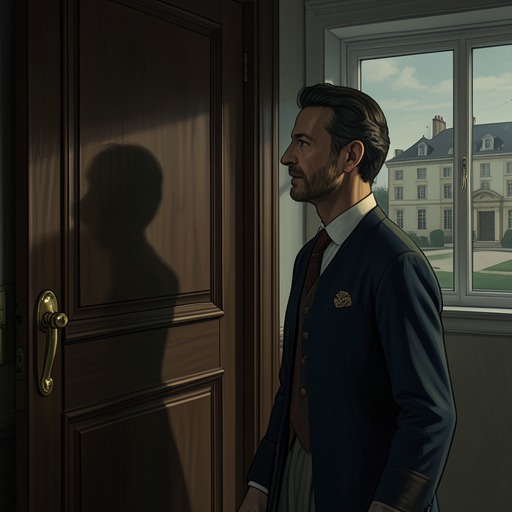
The image of sleep appears in a story told by Philip Marlowe, whose opening introduces him as a neatly dressed private detective visiting a wealthy client. That composed surface gives way to an investigation in which appearances repeatedly conceal the truth. Death is not presented as a single isolated conclusion; it becomes entangled with the disguises, false explanations, and silences through which the case is managed.
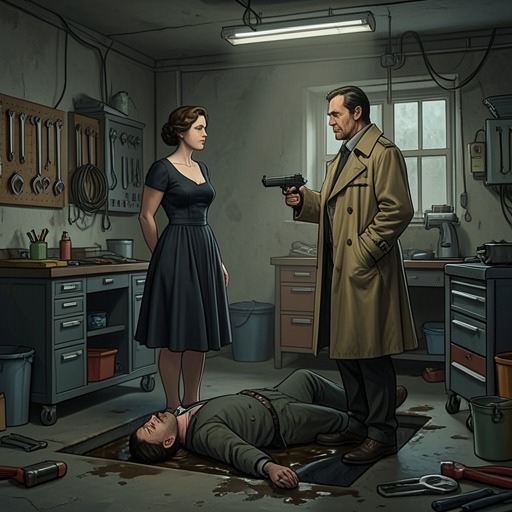
At Arthur Gwynn Geiger’s house, Marlowe finds Geiger dead after hearing a flash, a scream, gunshots, and a car departing. The scene’s apparent confusion is subsequently altered: when Marlowe returns, Geiger’s body has been removed, leaving a rug where it had lain. The sequence makes the novel’s sleep metaphor uneasy. Death may be named as rest, but the dead do not simply disappear from the story; their bodies, missing from their places, become evidence of the efforts to control what others can know.
Death, Disappearance, and the Hidden Story
The metaphor also touches the novel’s deeper mystery, the disappearance of Terence Regan. Captain Gregory’s account establishes that Regan left on September 16, a day when the chauffeur was off duty. His car was found four days later in a garage at Casa de Oro, with no prints on file to identify who had put it there. The circumstances leave open suspicion of foul play even as they lend themselves to another explanation: Regan may have left with Eddie Mars’s wife, who was also missing.
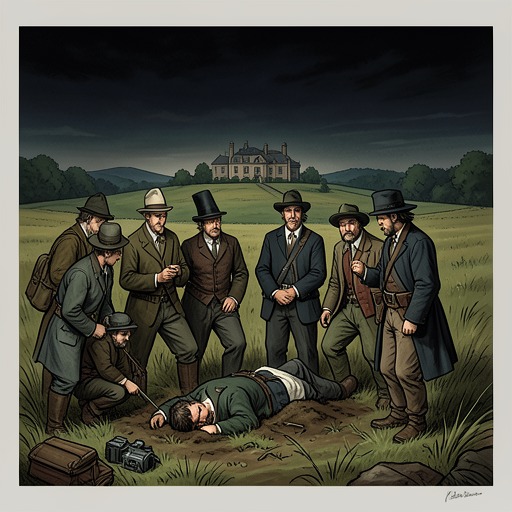
That unresolved account is finally overturned when Marlowe identifies Carmen Sternwood as Regan’s killer. He explains that, on the afternoon Regan disappeared, Regan took Carmen to old oil wells to teach her to shoot. Instead of firing at the can he had set up, she turned the gun on him. The disclosure transforms a disappearance that had been obscured by conjecture into a concealed death, and ties the novel’s image of sleep to the investigative work of recovering a truth deliberately kept out of sight.
Public Accounts and the Meaning of “Sleep”
The newspapers’ account of the earlier deaths shows how readily a death can be folded into a convenient public narrative. Their version credits Captain Cronjager with solving the Geiger and Joe Brody murders as a dispute over the proceeds of a wire service. It separates Owen Taylor’s death from the killing at Geiger’s house, describes Taylor as despondent and in poor health, and reports that his body will be sent to his family in Dubuque and that there will be no inquest. The account’s confidence disguises its distance from the connections Marlowe has uncovered.
Against these managed explanations, “sleep” is both an act of verbal softening and an image of what the investigation cannot leave undisturbed. The phrase gathers deaths that are disguised as suicide, obscured by a missing body, or hidden behind a supposed elopement. Its significance is therefore not that death becomes peaceful, but that the language of rest can conceal violence and uncertainty. Marlowe’s investigation keeps reopening what others have treated as settled, exposing the hidden story beneath the public one.